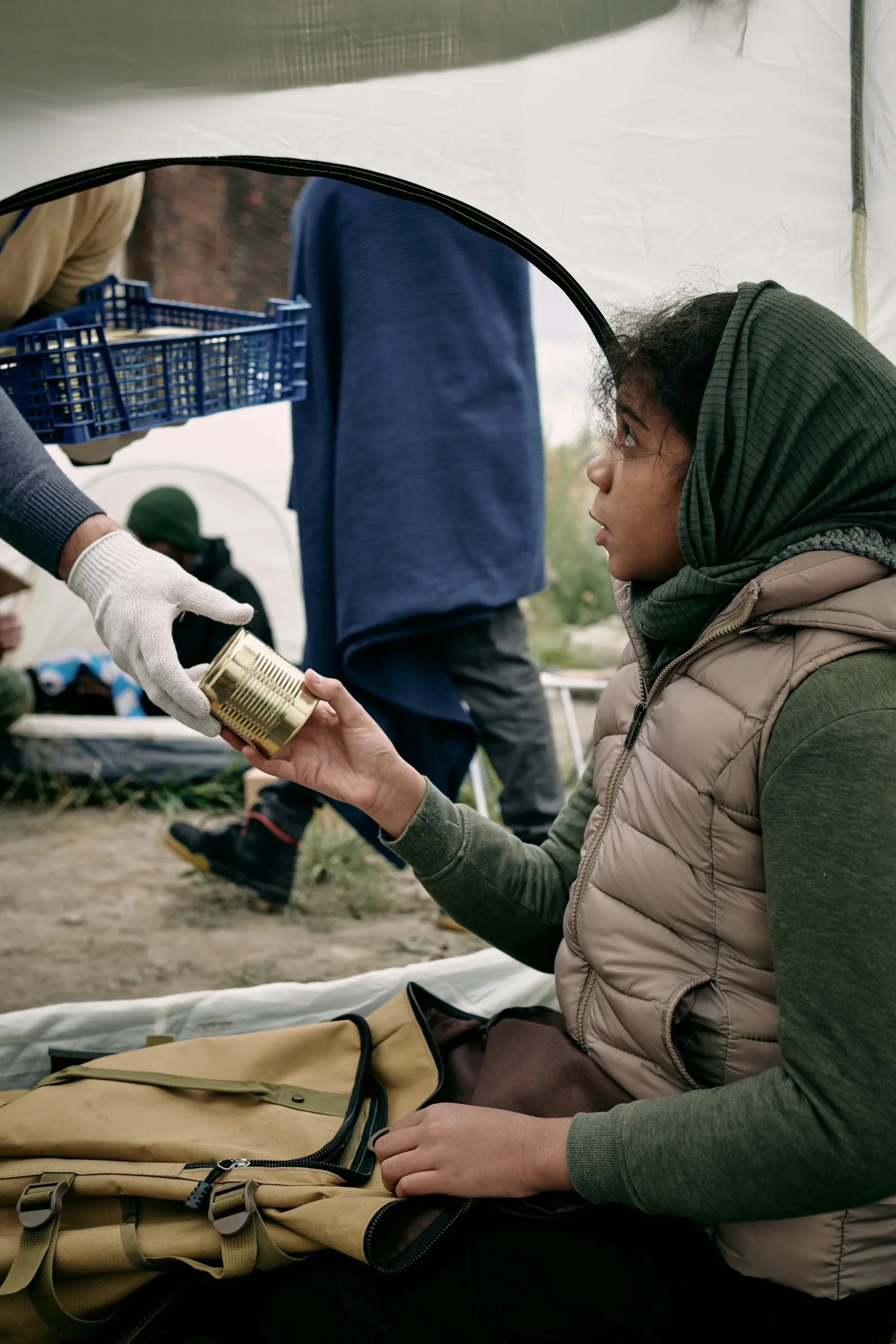
One of the reasons I write fiction—the biggest reason I write fiction—is to offer an opportunity for my readers to enter into someone else’s life. It’s fun, isn’t it, to shed your own cares and worries for a few hours and spend those hours instead inside the head—or heads—of other people? To experience places and events and even thoughts that are all foreign to your daily life? There’s a reason fiction is often portrayed as escapist.
Part of that opportunity, of course, is my own thinly veiled agenda: I want to share my worldview with others. I’m not a politician or an influencer—all I have are my stories. But the characters I create in those stories can be powerful. They can show, in ways that speeches or videos never could, what it is like to live the life of someone who is unlike you. Who holds different convictions, practices a different religion, comes from a different country. And entering into those lives is what some people would call empathy, because the connections it makes can’t then be un-seen, unknown. The characters become more than the labels we affix to others: they are real, breathing, loving, complicated, wondrous people.
And of course my hope is that as these characters widen the reader’s understanding of their world, there may be a few fewer “others” in their lives.
I’d like to think that works for me, too. I’d like to think that I can build empathy in myself for those who don’t agree with me, who write hurtful things, who advocate for a world I think is dangerous. And I try. I sometimes read novels out of my comfort zone, in which characters portrayed as positive also exhibit misogyny, or racism, or elite views. I ponder what others find in these people that brings them back to those stories.
And maybe that self-examination is enough. I hope so, because sometimes—often, even—I can’t quite reach the next step, the empathy phase.
I cannot read these novels (never mind reading about current events) without having questions stop me. Why would they believe that? How can anybody be that cruel? Why don’t they care? What makes them feel that way?
I can empathize with stories of people experiencing loss and its immediate aftermath—the need for anger, the need to blame someone else for their situation. We all feel something similar in moments of great trauma, and I can enlarge my experience of loss to encompass theirs, to feel that pain. Empathy helps me enter into situations I’ll never know personally, and be part of the characters responding to them.
But it doesn’t stop the questions. How does blaming someone else become the central part of your worldview?
And here’s the thing. We’ve all read about fictional characters whose lives shifted so dramatically through a moment of pain or loss that their whole beings became swallowed up by that moment. I’ve written about some of them. They go on, often, to harm others in a single-minded quest for vengeance, for their view of justice, for anything to alleviate their feelings of anger or fear. In our fiction, we call these people murderers. and while we can (and should) understand how they got there, it doesn’t justify the end result.
I look at current affairs and wonder about the criminality that abounds, that we’re told is justified, that is somehow protected, and more, different questions come up. Because I don’t need to ask the “why”—my empathy has answered that for me. But now I have to ask what can be done to take people so different from us—greedy, cruel, self-centered—and move them to a better place, or remove them from areas of influence altogether.
In mystery novels, the answer is simple. Life may not be fair, but at the end of the day, justice is done: the villain goes to prison, life resumes in its usual wobbly way. The immediate questions are answered. (In the best mystery novels, the reader is left with other, more existential questions to ponder, but that’s a subject for another essay.)
Empathy is absolutely what we need—in our lives, in our world. But caring doesn’t necessarily change anything. What do we do when empathy isn’t enough?